


How to Choose the Right Boarding Kennel for Your Dog
The essentials in 30 seconds
There is no single ideal boarding solution for every dog. A good decision rests on six questions:
- Does the type of accommodation match my dog’s profile?
- Does the establishment assess each dog before a stay?
- Are groups, spaces, and rest periods genuinely organized and supervised?
- Is the health and vaccination policy written down and enforced?
- Do the activities meet the dog’s physical, social, cognitive, olfactory, and emotional needs?
- Do customer reviews, staff qualifications, and safety procedures actually confirm the marketing promises?
Price, photos, and the size of the property matter, but they alone cannot tell you whether a boarding kennel is actually good.



What are the different boarding options for a dog?
1. Individual boxes or private spaces
The dog has its own space to sleep and rest. Walks and activities may be individual or group-based depending on the establishment.
This solution can suit dogs who need calm, who eat alone, who tolerate close contact poorly, or whose interactions need to be carefully selected.
Things to check:
- Actual frequency and length of walks
- Quality of thermal and acoustic insulation
- Comfort of the sleeping area
- Ventilation
- Human presence
- Ability to withdraw and time spent alone
Individual housing therefore does not necessarily mean isolation; it all depends on what is offered outside rest periods.
2. Group or “free-roaming” boarding
Dogs spend a large part of the day together as a group, and in some establishments they also sleep together.
This solution can suit sociable dogs who are comfortable with other dogs and used to sharing their space.
Things to check:
- How groups are formed
- Group size
- Dog-to-staff ratio
- How meals and toys are managed
- Conflict prevention
- Ability to separate a dog immediately
- How nighttime is organized
Group living is not automatically synonymous with well-being. A sociable dog may also need to step away, sleep without being disturbed, or avoid certain other dogs. Competent supervision and withdrawal areas are essential.
3. “Resort”-style boarding with enriched activities
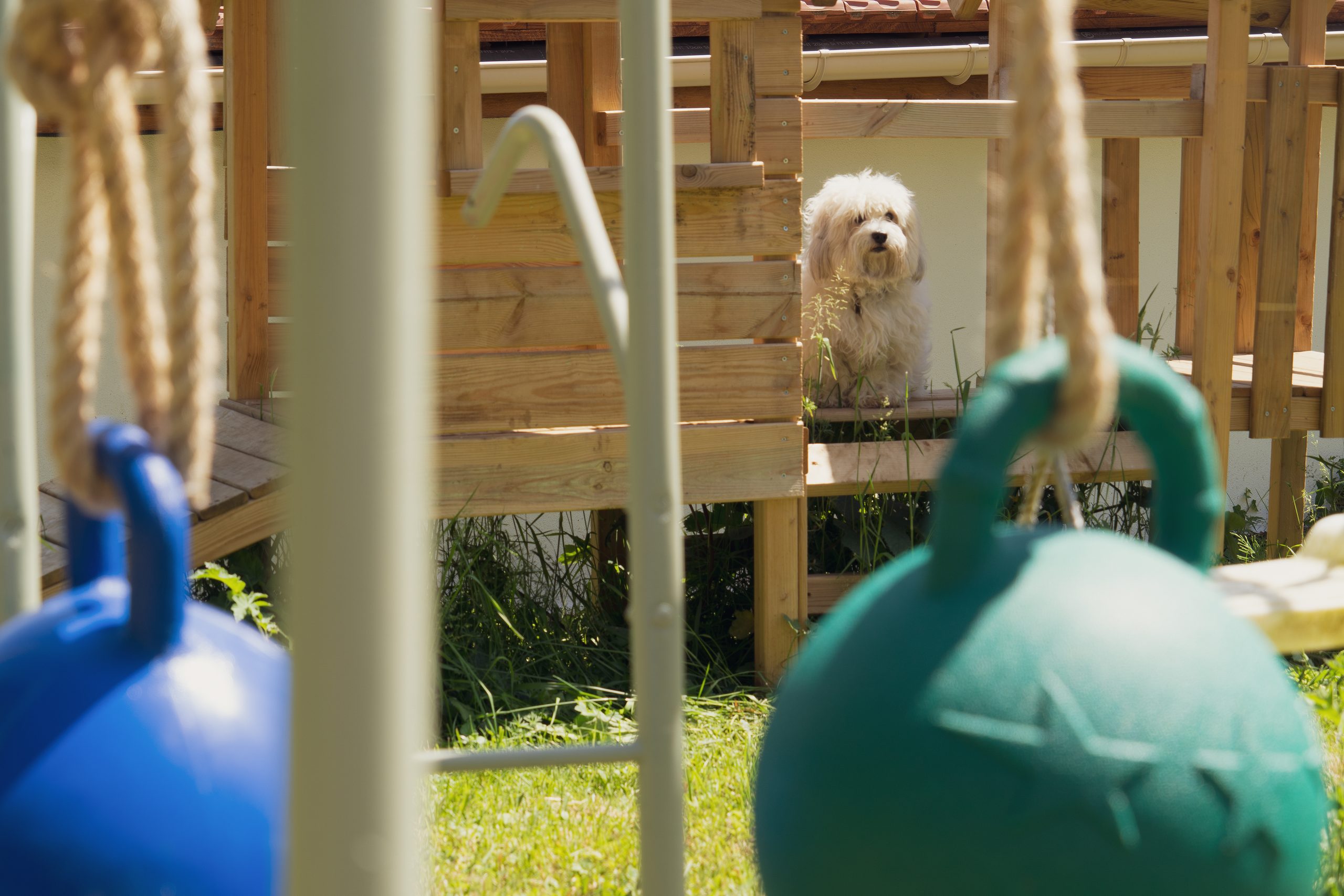
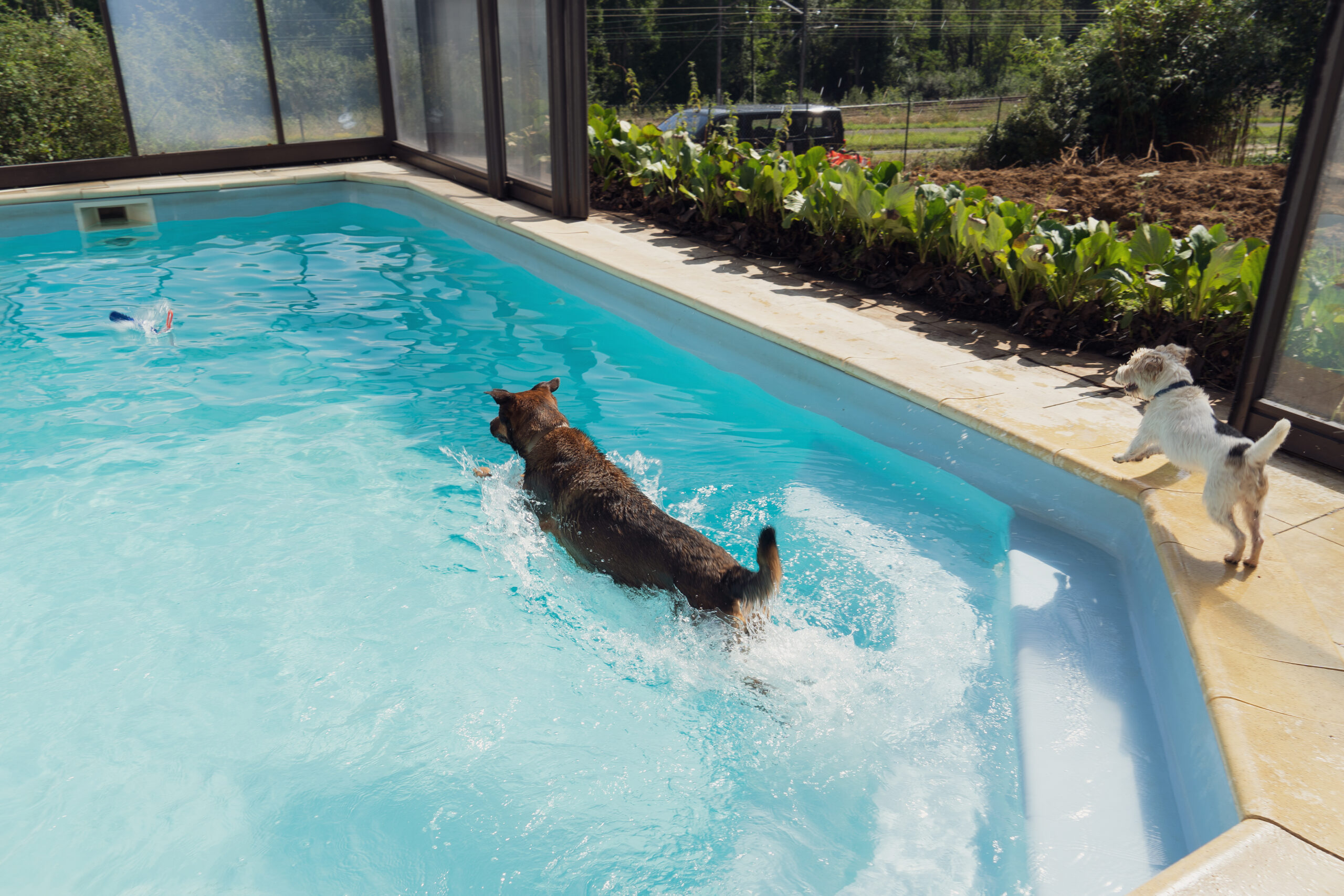
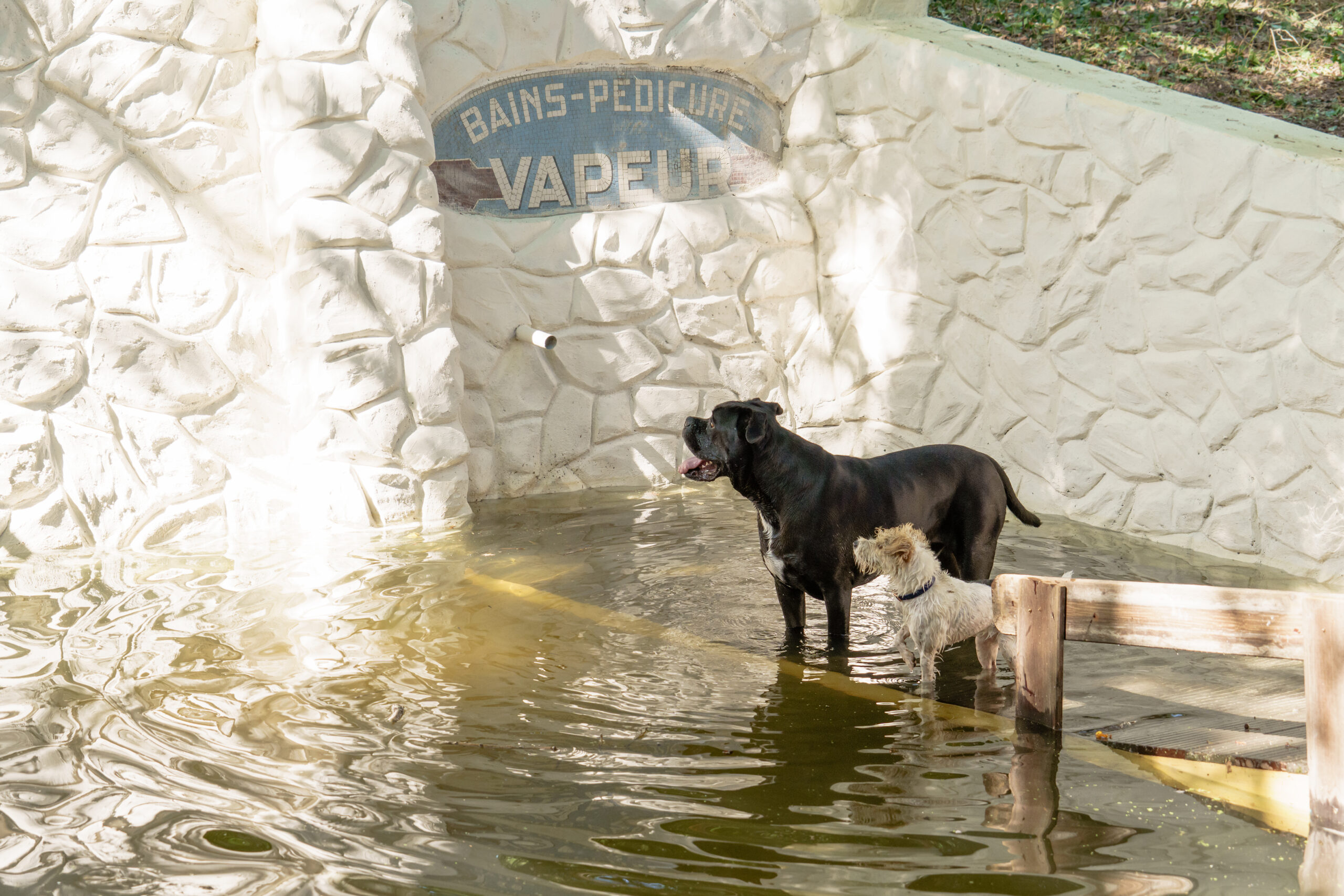
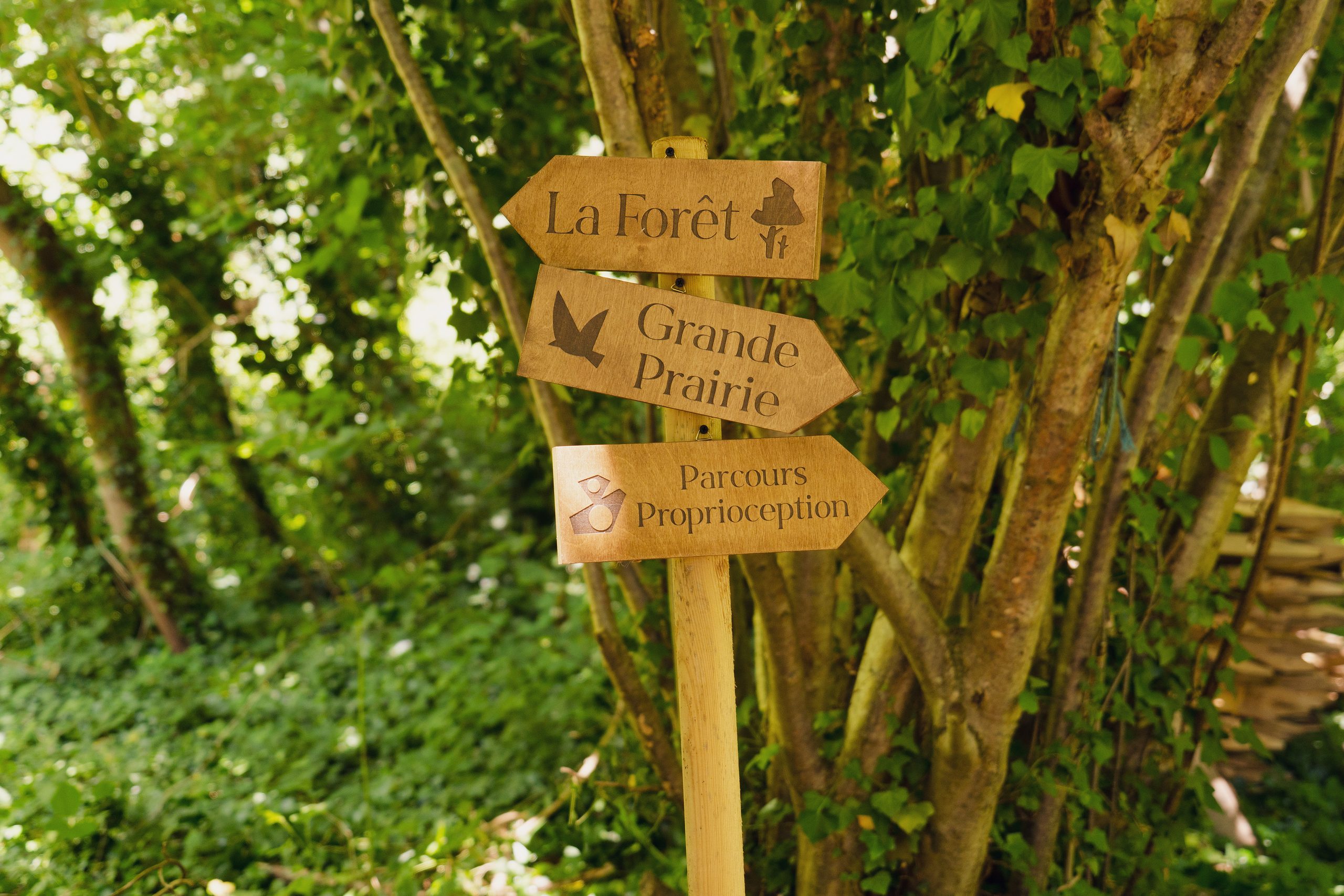
This combines accommodation, outdoor spaces, and varied activities: walks, social play, scent exploration, swimming, learning, chewing, food-foraging games, or proprioception exercises.
This solution can suit owners looking for comprehensive care, and dogs who benefit from a tailored program rather than a simple string of walks.
Things to check:
- Are the activities actually included?
- Are they suited to the dog’s age, health, and preferences?
- Are there recovery periods?
- What supervision is organized during activities?
A pool or a large field are only useful if they are properly supervised and used appropriately.
4. Host families
The dog stays at the home of a professional or a private individual, often with few other animals present.
This solution can suit dogs who are very attached to a home environment, senior dogs, or dogs who struggle in a group setting or experience separation anxiety at night.
Things to check:
- Professional status
- Insurance
- The host’s experience
- Total number of animals present
- Children or other animals in the home
- How secure the garden is
- Length of the host’s absences and backup plan in case of the unexpected (vet visit, daily errands…)
5. In-home pet sitting.
The pet sitter either lives at the owner’s home or visits several times a day.
This solution can suit dogs who do not cope well with changes of environment, provided they can tolerate periods without human presence.
Things to check:
- Actual time spent on-site
- Number and length of walks
- Identity and insurance verification for the sitter
- Key management
- Veterinary protocol in case of a problem
- Backup sitter available if the primary one is unavailable


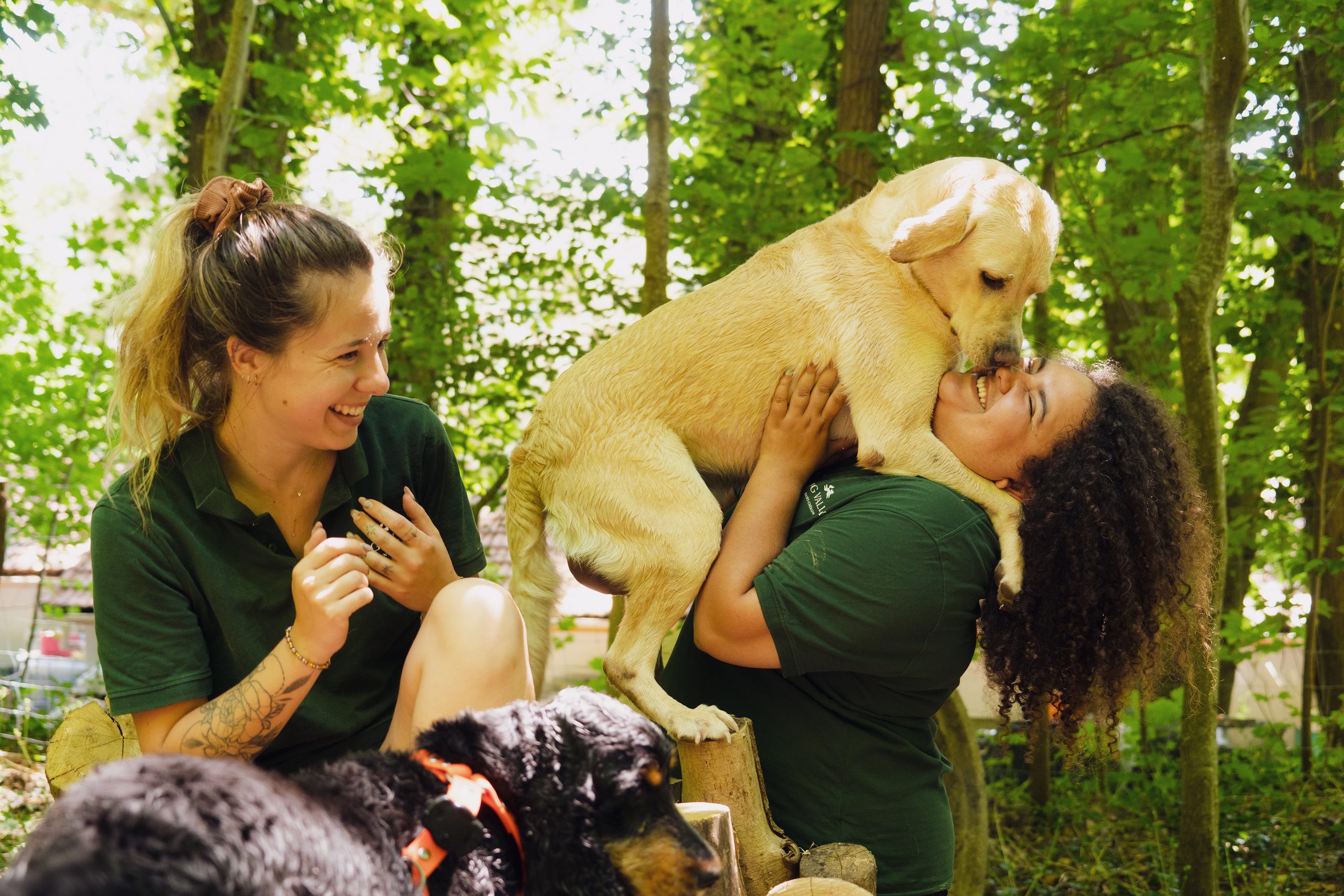
Why “tiring them out” is not enough to ensure their well-being
Canine well-being cannot be reduced to physical exertion. Running and playing non-stop can increase excitement, fatigue, and tension rather than calming a dog down. Balanced care should cover several categories of needs:
- Physical: movement, walks, play, and exercise suited to the dog’s age and condition;
- Social: chosen contact with humans and, when enjoyed, with compatible dogs;
- Cognitive: simple problem-solving, learning, and food-foraging;
- Sensory and olfactory: exploration, sniffing, and discovering varied environments;
- Emotional: predictability, the ability to choose, to step away, and to return to a calm state;
- Rest: periods free of demands, a comfortable bed, and uninterrupted sleep.
Scientific literature on dogs housed in kennels or shelters indicates that environmental enrichment can encourage resting behavior and reduce certain behaviors associated with stress or frustration. The enrichments studied include social contact, food-foraging, objects, scents, and certain sound environments. Results vary, however, depending on the dog and the setup: enrichment should be selected and observed, not applied mechanically to every animal. A pilot study published in Animals reports a reduction in certain abnormal behaviors with enrichment devices; another study of 60 dogs shows that olfactory and auditory stimulation can favorably shift certain behavioral indicators.
The practical takeaway is simple: ask less “how many activities do you offer?” and more “how do you choose the activities that suit my dog, and how do you make sure they can rest?”

The 10 criteria to check before booking a boarding kennel
1. A prior assessment and, ideally, a trial day
A preliminary meeting allows the staff to observe the dog in a new environment, gather information about its habits, and gradually test its interactions. For a longer stay, a trial day — and possibly a first night — reduces uncertainty for both the owner and the team.
This assessment should cover: sociability, canine communication, recall, reaction to handling, feeding, resource guarding, separation anxiety, health, treatments, sleep, and triggering situations. A trial day is not an absolute guarantee: behavior can change with duration, fatigue, or the group’s composition. It remains, however, a far more useful indicator than automatic acceptance over the phone.
Good sign: the establishment can refuse or postpone admission if conditions are not suitable for the dog.
2. Actual capacity and supervision ratio
Don’t just ask “how many dogs can you take?” Ask:
- How many dogs are present at the same time during peak season;
- How many staff members are physically present during the day and at night;
- How many dogs make up each group;
- Whether one staff member remains exclusively responsible for their group;
- How breaks, handovers, and staff absences are managed.
- A large capacity is not necessarily a problem if the spaces, teams, and groups are correctly sized.
Conversely, a small facility can be under-supervised. The ratio that matters is the one observed on the ground, during busy hours — not just the total headcount listed on the website.
3. Staff qualifications, obligations, and skills
In France, the professional dog-boarding business is regulated. Check in particular that the establishment is registered in accordance with applicable requirements, that at least one person in direct contact with the animals holds the required knowledge certification — for example the ACACED or an equivalent recognized qualification — and that professional liability insurance covers the activity. Applicable health and animal-welfare rules are notably set out in the French order of 3 April 2014.
The ACACED certification is a regulatory baseline of knowledge; on its own, it is not proof of the overall quality of a boarding facility. Practical experience, ongoing training in canine behavior, the ability to read stress signals, pet first aid, and staff stability are equally decisive.
Questions to ask:
- Who actually takes care of the dogs?
- What training does this person have?
- Can the team interrupt an interaction before it escalates?
- Who makes decisions in an emergency?
4. A written vaccination and health policy
A serious boarding facility should clearly explain its health requirements before arrival. Ask which vaccines are required, by when they must be up to date, and which proof documents are checked. Requirements can vary depending on the facility, the profile of the dogs accepted, and the recommendations of the referring veterinarian.
The policy should also specify:
- procedure in case of coughing, diarrhea, vomiting, parasites, or fever;
- exclusion period following a contagious illness;
- required parasite treatment;
- possible isolation of a symptomatic dog;
- cleaning and disinfection of premises, bowls, bedding, and vehicles;
- medication management and traceability;
- contact details for the usual vet and authorization for emergency care.
Vaccination reduces certain risks and sometimes the severity of illnesses, but it does not eliminate all risk of contagion in a group setting. Be wary, therefore, both of a facility with no health policy and of a promise of “zero risk.”
5. How groups are formed and supervised
Groups should not be formed based solely on size or breed. Age, play style, communication, physical condition, tolerance for excitement, and ability to take breaks are often more relevant.
Check the introduction method, maximum group size, whether a staff member is constantly or only intermittently present, separation during meals, and how toys are used. Also ask where a dog goes if it wants to withdraw or needs to be separated quickly.
6. Facility and transport safety
A visit, in person or via live video, lets you examine very concrete details:
- Fences that are sufficiently tall, sturdy, and well maintained;
- Double-gated airlocks at entries and exits;
- No dangerous corners, sharp materials, or accessible hazardous products;
- Ventilated or air-conditioned premises where needed;
- Pools accessible only under supervision, with easy exit;
- Possibility of physically separating dogs;
- Smoke detectors, fire, and evacuation procedures;
- Ventilated, secured vehicles equipped with proper restraints or compartments;
- Controlled hand-off of dogs to prevent mix-ups or escapes.
Also ask whether someone is on-site overnight, whether video surveillance exists, and — above all — who actually responds when an alert goes off. A camera without a response protocol is not adequate supervision.
7. Veterinary protocol and emergency management
The facility should be able to explain without hesitation: which vet is contacted, who transports the dog, how the owner is reached, up to what amount care can be authorized, and where the medical file and treatment authorization are kept.
8. Sleep and recovery conditions
Ask to see the exact spot where the dog will sleep. Will it be alone, with littermates, or in a group? Is the temperature controlled? Does barking travel from one area to another? Can dogs nap during the day? Is the bedding washable, dry, and appropriate?
A schedule packed from morning to night may look appealing to a human, but be unsuitable for the dog. Rest should be built into the daily routine, not just happen once every dog is exhausted.
9. Diversity and individualization of activities
Look for a balance between walks, free exploration, social play, scent work, chewing, food-foraging, cognitive exercises, movement or proprioception work, human contact, and calm time. Not every dog should do everything.
A puppy, a senior dog, a brachycephalic breed, a dog in recovery, and an energetic young athletic dog cannot follow the same program. For swimming, check water quality, supervision, entry and exit procedures, rinsing, and whether the dog can opt out.
10. Transparency of reviews and communication
Online reviews are useful because they give access to repeated experiences that a single visit cannot show: punctuality of transport, quality of updates, handling of an incident, the dog’s condition on return, or consistency of service during peak season.
But an average rating is not enough. To interpret reviews well:
- Favor a significant volume of reviews spread out over time;
- Read recent reviews, both positive and negative;
- Look for concrete details rather than generic compliments;
- Notice how the establishment responds to criticism;
- Check for consistency between Google, social media, and testimonials;
- Be wary of a sudden batch of very short or identically worded reviews;
- See whether customers mention multiple stays, not just a single complimentary visit.
Reviews are a body of evidence, not absolute proof. They should complement a visit, a detailed conversation, and a trial day. A transparent boarding facility welcomes difficult questions and is also upfront about its limitations.


Checklist to use before making a decision
Score each criterion: 2 points = clear and verifiable answer; 1 point = partial answer; 0 points = no answer or a concerning one. Safety and health criteria should never be offset by an appealing activity or an attractive price.
Dog profile and fit
☐ A detailed interview is carried out before admission.
☐ A trial day is offered or required before a long stay.
☐ Habits, fears, treatments, and stress signals are recorded.
☐ The facility can explain which dogs it cannot accept.
Supervision and capacity
☐ Maximum simultaneous capacity is disclosed.
☐ The number of staff present at different times is specified.
☐ Group size and grouping criteria are explained.
☐ An immediate separation solution is in place.
Skills and compliance
☐ The facility complies with applicable registration requirements.
☐ Required knowledge or qualifications, including ACACED or a recognized equivalent, can be verified.
☐ Professional insurance can be confirmed.
☐ Staff are trained in conflict prevention and emergencies.
Health and vaccination
☐ Required vaccines and proof documents are specified in writing.
☐ Symptomatic animals are subject to a clear procedure.
☐ Treatments are administered and tracked reliably.
☐ An isolation area and a veterinary protocol exist.
Safety
☐ Entrances have airlocks and fences are appropriate.
☐ Spaces, water features, and vehicles are secured.
☐ Extreme temperatures and fire risks are anticipated.
☐ Overnight supervision and alert response are explained.
Activities and rest
☐ The program covers needs beyond physical exertion alone.
☐ Activities are individually tailored and never imposed.
☐ Calm areas and genuine rest periods are planned.
☐ The dog’s sleeping area can be seen before booking.
Reputation and transparency
☐ Reviews are numerous, recent, detailed, and consistent.
☐ Criticism receives professional, factual responses.
☐ The contract specifies price, inclusions, cancellation, and liability.
☐ Owners know how often they will receive updates.
Decision rule:
Rule out any option that raises a serious doubt about safety, health, or supervision. Among the remaining options, choose the one that best matches your dog’s real profile — even if it isn’t the one offering the most activities.
What are the warning signs?
- Refusal to show sleeping areas or to answer questions about capacity;
- Accepting every dog with no questionnaire or assessment;
- No verification of health documents;
- Large groups with no indication of how many staff supervise them;
- Claims that dogs “always sort things out among themselves”;
- Intensive activities with no planned rest time;
- No separation during meals or in case of tension;
- No clearly explained veterinary, overnight, or evacuation procedure;
- Prices or extra fees not detailed in a contract;
- Recent reviews repeatedly mentioning the same issue with no clear response.
FAQ
The best boarding solution is the one that matches the dog’s temperament, health, and habits. A sociable dog may enjoy well-organized group boarding; a more sensitive dog may prefer individual housing, a host family, or in-home pet sitting.
It is strongly recommended before a first long stay. It helps observe how the dog adapts, but it does not replace a full assessment or supervision during the actual stay.
Exact requirements depend on the facility, its referring veterinarian, and the risks associated with group living. Owners should ask for a written list of required vaccines and deadlines, then have it confirmed by their vet if needed. A serious boarding facility checks proof documents and also explains its procedure in case of a contagious illness.
Ask for the maximum simultaneous capacity, the number of people present during each time slot, and the size of each group. Total staff headcount or the size of the property alone are not enough.
They help spot the consistency of the service and recurring problems, especially when recent and detailed. However, they should always be cross-checked with a visit, precise answers, professional documents, and a trial day.
No. Quality depends on how well activities are tailored to each dog, the competence of the supervising staff, and how much room is made for calm and sleep. Constant stimulation can actually be counterproductive.
Sources and references
French Republic, order of 3 April 2014 setting out health and animal-welfare rules applicable to activities involving companion animals.
Kiddie J. and Collins L., Environmental enrichment for kennelled dogs: a review, Animal Welfare, 2014.
Amaya V. et al., Effects of Olfactory and Auditory Enrichment on the Behaviour of Shelter Dogs, Animals, 2020.
Schipper L. et al., Effects of Environmental Enrichment on Dog Behaviour: Pilot Study, Animals, 2022.
Gunter L. et al., Investigating the Impact of Brief Outings on the Welfare of Dogs Living in US Shelters, Animals, 2021.
Research conducted in shelters or kennels sheds light on certain stress and enrichment mechanisms, but its findings cannot automatically be applied to every boarding facility or every dog. Individual