


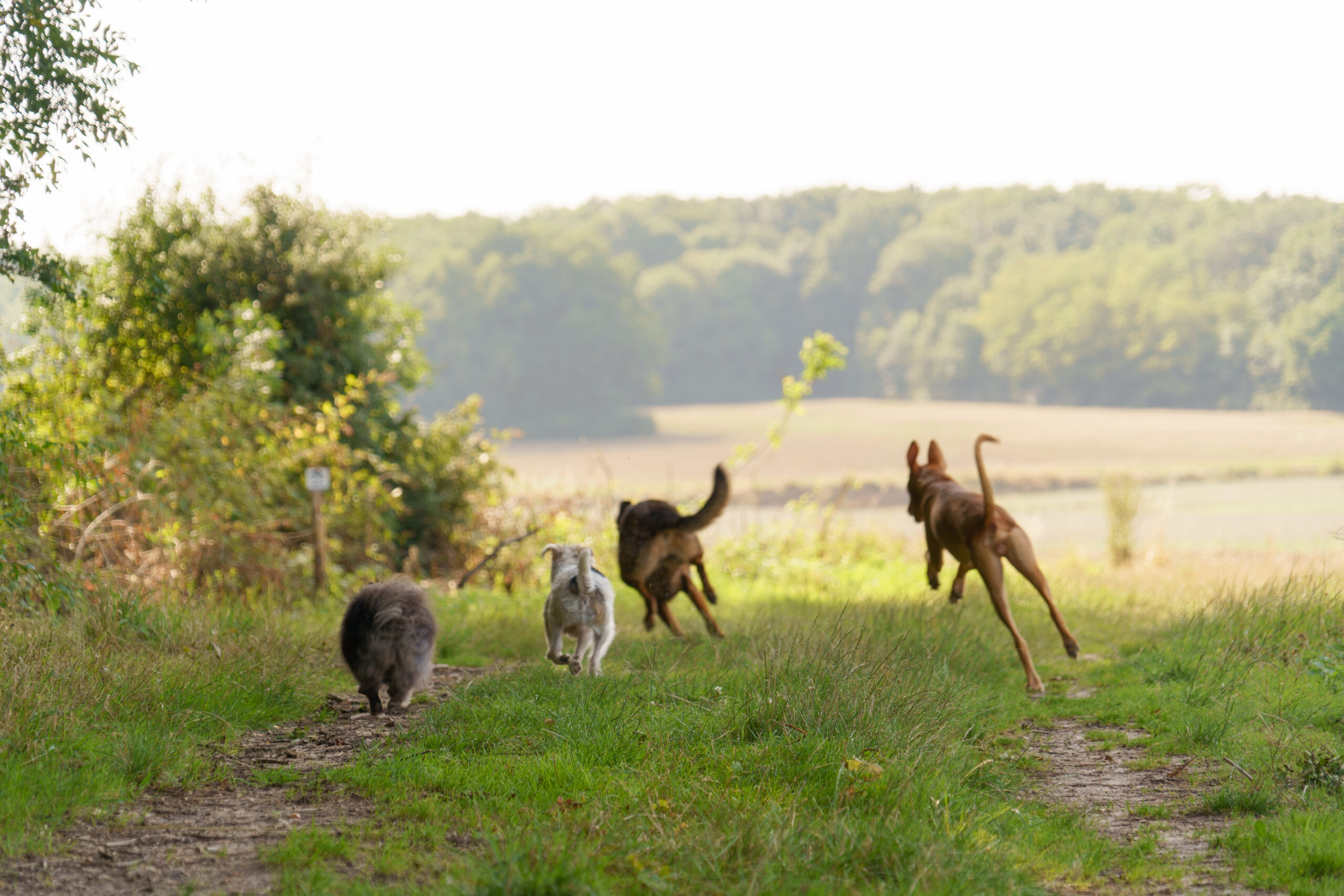
LThe point of dog daycare should not simply be to “tire your dog out”. It should be to give him a genuine day of enrichment matched to his natural needs: to move, to explore, to use his nose, to meet others, and to rest.

Why a quick walk isn’t enough
Many family dogs spend eight to ten hours alone at home, with one or two brisk walks to break up the day. Yet the landmark work of Scott and Fuller on the social behaviour of dogs showed that stability, routine and regular social contact are essential to avoiding over-attachment, anxiety and aggression.
The biologist Marc Bekoff makes a related point: a dog needs as much mental and social stimulation as physical exercise. Throwing a ball in the park does not, on its own, cover what he needs.
Well-designed daycare is precisely what fills that gap, giving a dog a structured day with company, choices, discoveries and proper periods of rest.
What the research tells us about canine enrichment
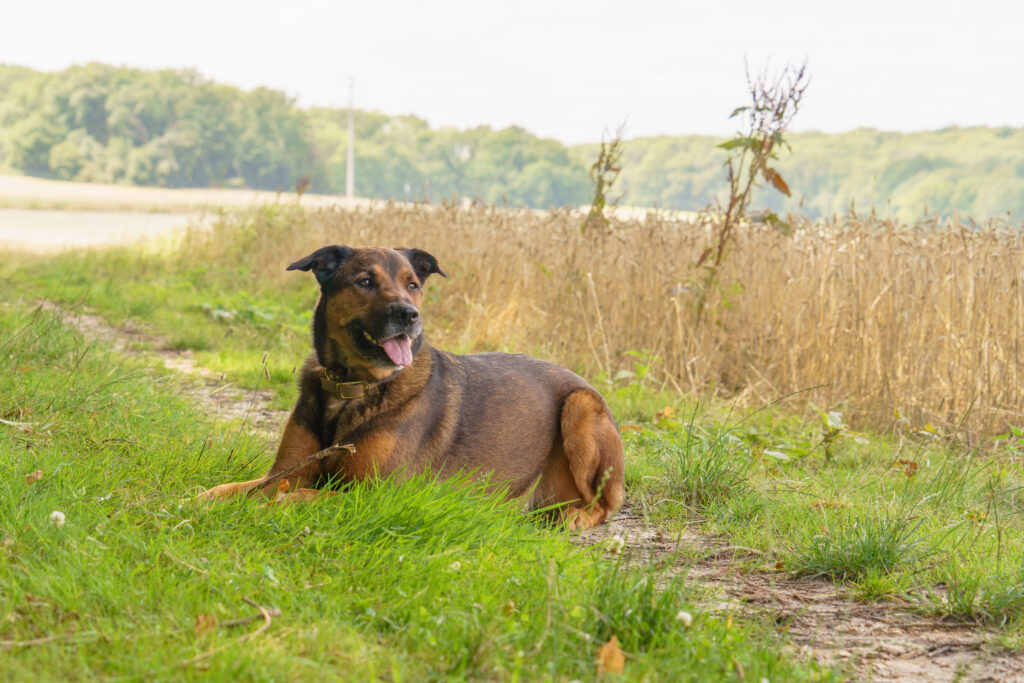
Recent studies of dogs in shelters and kennels consistently show that environmental enrichment markedly improves welfare, reducing signs of stress and increasing relaxed behaviour.
Scent enrichment: the power of the nose
A 2025 study published in the Journal of Veterinary Behavior (Antonino et al.) compared two forms of enrichment in shelter dogs and found that scent-based enrichment reduced stress behaviours and encouraged exploration, whereas food-based enrichment mainly raised general activity levels without improving social interaction.
Earlier work points the same way. In Applied Animal Behaviour Science, Duranton and Horowitz showed that two weeks of regular nosework left pet dogs measurably more “optimistic” in a cognitive bias test — a recognised indicator of an improved emotional state. Their paper is titled, aptly, “Let me sniff!”
In practice, building scent trails, tracking games and treasure hunts into a daycare day is not a gimmick. It is a scientifically validated way of improving a dog’s wellbeing.
Natural sounds and deep rest
Research carried out at Linköping University in Sweden found that dogs in a shelter exposed to nature sounds rested more and moved about less than dogs exposed to neutral background noise.
Giving a dog genuine quiet time, in a calm acoustic environment, is therefore just as much a part of a good daycare day as the play itself.
What an enriched daycare day looks like at Dog Valley
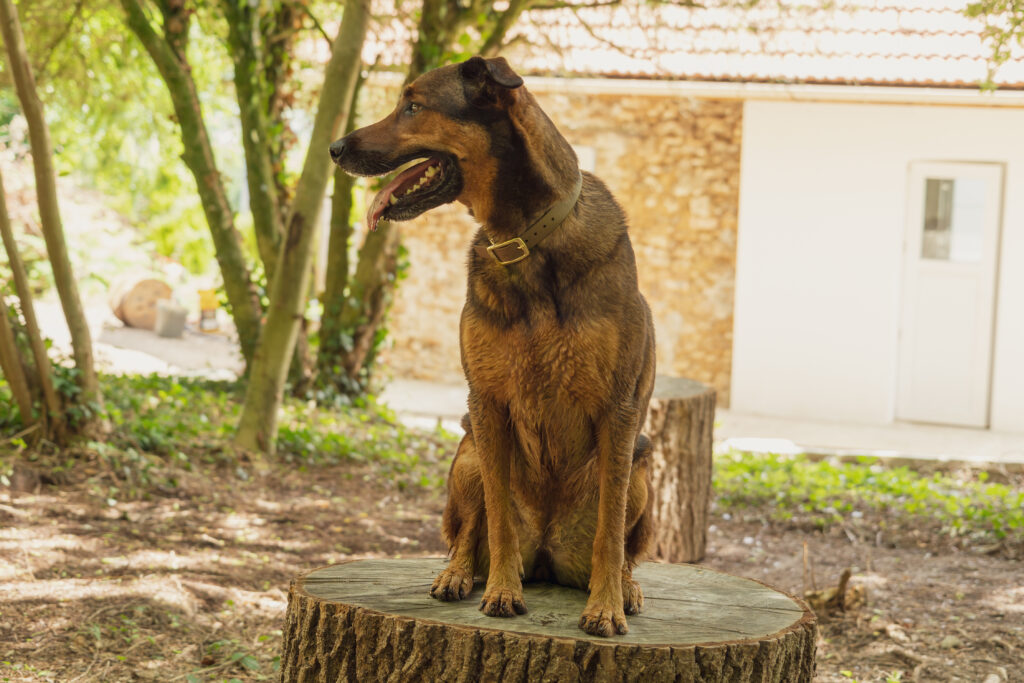
Our daycare near Paris is built as a complete enrichment programme, not as a dog park with a fence around it.
Supervised socialising in small groups
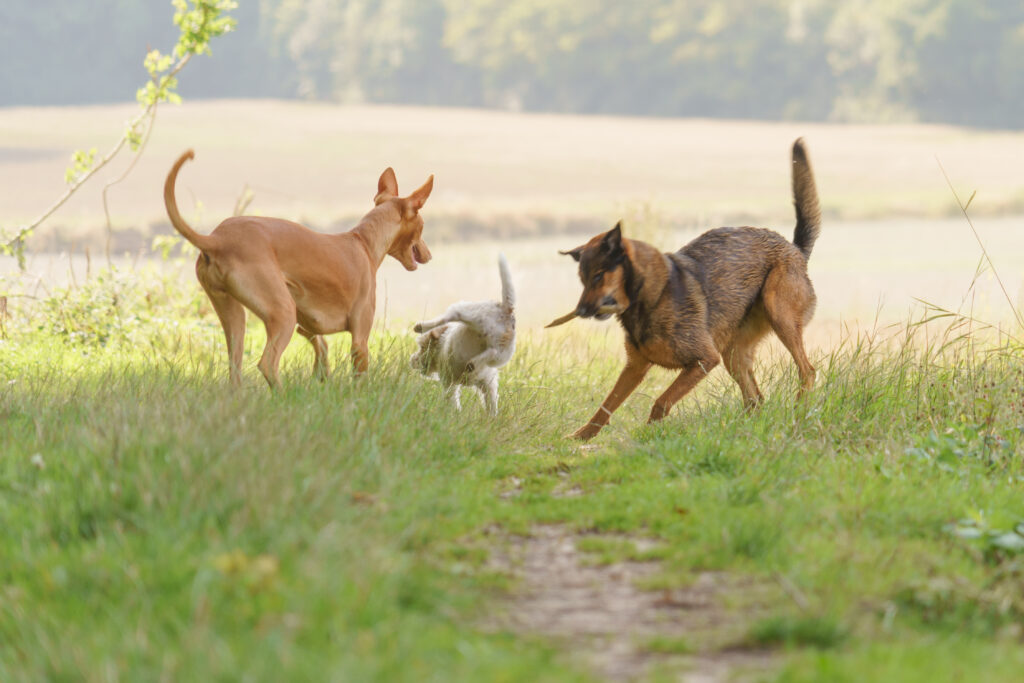
Dogs move in small groups of no more than seven, across five hectares of countryside — around twelve acres — under the constant supervision of a team trained in positive reinforcement.
Groupings are chosen according to each dog’s temperament, age and needs, to encourage positive encounters and avoid over-stimulation.
Alternating activity and rest: real mental hygiene
The day alternates between exploration — woodland, the scent garden, games — sessions of mental stimulation such as search games and playful training, and periods of rest in a calm setting.
That alternation matches what the enrichment research recommends: a dog needs cycles of activity and rest to absorb his experiences and come home settled, rather than wound up.
A daycare subscription: the best ally of an active family dog
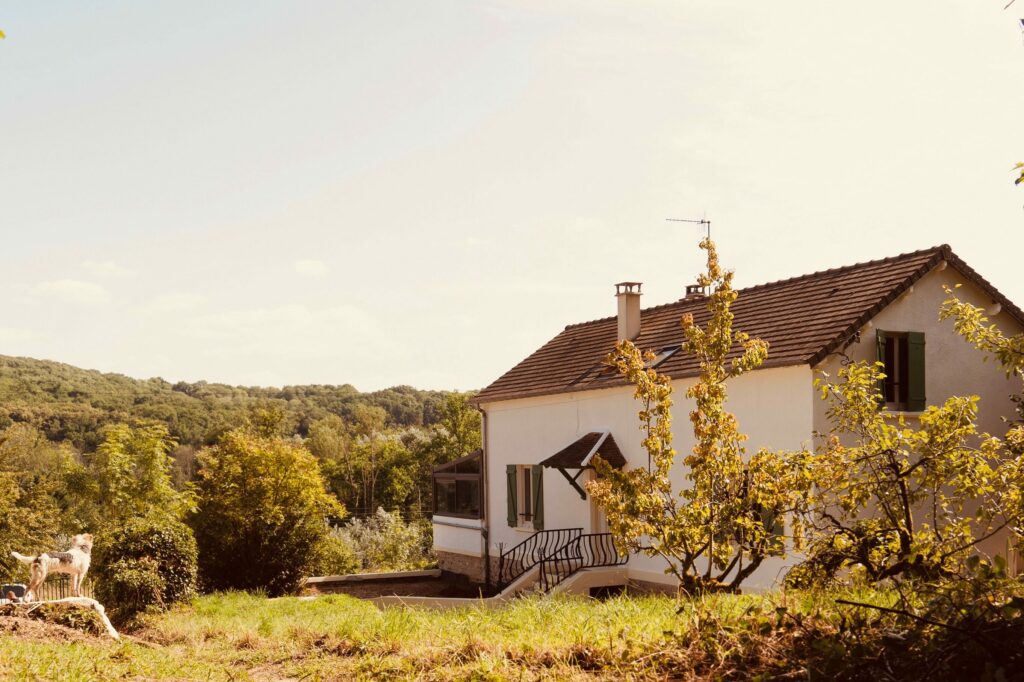
For busy city families, a daycare subscription guarantees your dog one or more days a week devoted entirely to his own fulfilment.
It brings continuity to his learning, his socialising and the way he manages his emotions — a complement to weekend activities such as training clubs, dog sports and hiking.
How to choose daycare that genuinely centres on wellbeing
A few questions worth asking:
- Are the days structured around alternating activity and rest, or is it non-stop play?
- Are there real enrichment activities — scent, cognitive, natural environment — or simply an enclosed space?
- Is the team trained in positive reinforcement and in reading canine body language?
Daycare informed by the research on enrichment, socialisation and rest does more than tire a dog out. Day after day, it builds his emotional balance and his lasting wellbeing.


Sources
- Scott, J.P. & Fuller, J.L. (1965). Genetics and the Social Behavior of the Dog. University of Chicago Press.
- Antonino et al. (2025). Effects of two types of environmental enrichment on the behavior of shelter dogs. Journal of Veterinary Behavior. https://www.sciencedirect.com/science/article/abs/pii/S1558787825000541
- Duranton, C. & Horowitz, A. (2019). Let me sniff! Nosework induces positive judgment bias in pet dogs. Applied Animal Behaviour Science. https://doi.org/10.1016/j.applanim.2018.12.009
- Nature sound enrichment in shelter dogs, Linköping University. https://liu.diva-portal.org/