


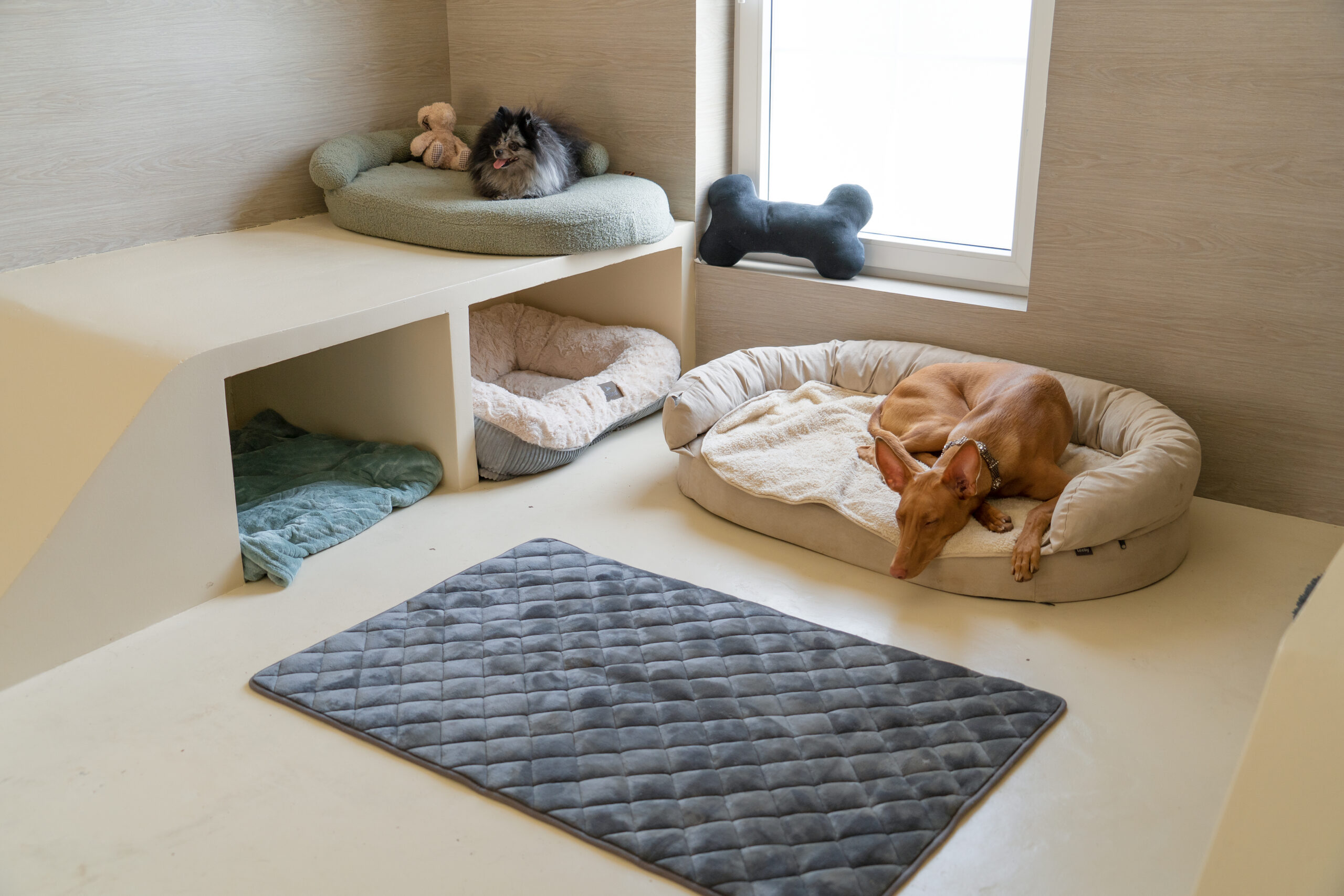
You have moved to Paris, found the vet, worked out the métro and located the nearest park that actually accepts dogs. Then real life starts: a full workday, a weekend away, or a holiday when your dog cannot come with you.
If you search for dog daycare in Paris or dog boarding in Paris, you will find everything from individual sitters to urban crèches and countryside facilities. The difficult part is not finding a name. It is working out which option is genuinely safe and appropriate for your dog.
The one-minute test
A safe daycare can explain its system, not just show happy photos.
Ask how groups are formed, how many dogs are together, when they rest, who supervises them, where boarding dogs sleep and what happens if a dog is uncomfortable or unwell. Clear answers matter more than adjectives such as “luxury” or “premium”.
Dog daycare, dog sitter or boarding: first choose the right service
Dog walker
Best for a short break in the day when your dog is otherwise comfortable at home.
Dog daycare
Best for a full day of structured activity, social time and rest when the environment suits your dog.
Dog boarding
Best for overnight stays, weekends and holidays — but sleeping arrangements and overnight supervision matter.
What French rules already expect from professional dog care
France regulates commercial dog-care activities. The current rules cover commercial care both with and without overnight accommodation. Among other requirements, professional operators must be declared and follow sanitary and animal-welfare rules. For boarding and daycare, the 2025 rules also require a written care contract containing practical information such as the animal’s identification, dates of care and arrangements for feeding and veterinary intervention when necessary.
You do not need to become a French-law expert before booking. But it is reasonable to ask a professional facility how it handles identification records, health information, emergencies and its veterinary protocol.
Official reading: the French Ministry of Agriculture explains the main options for having a pet looked after. The current legal requirements for commercial dog and cat care are set out in Article 27 of the order of 19 June 2025.
7 questions to ask any dog daycare in Paris
1. How large are the groups?
“Small group dog daycare” sounds reassuring, but ask for an actual number. A maximum group size gives you something concrete to evaluate. Also ask whether dogs are grouped by size, energy level, play style or temperament.
2. How do you decide whether a dog belongs in the group?
A social environment is not right for every dog. Look for an assessment before regular attendance and a provider willing to say “this is not the best environment for your dog” when necessary. That is a safety feature, not a rejection.
3. Where and when do dogs rest?
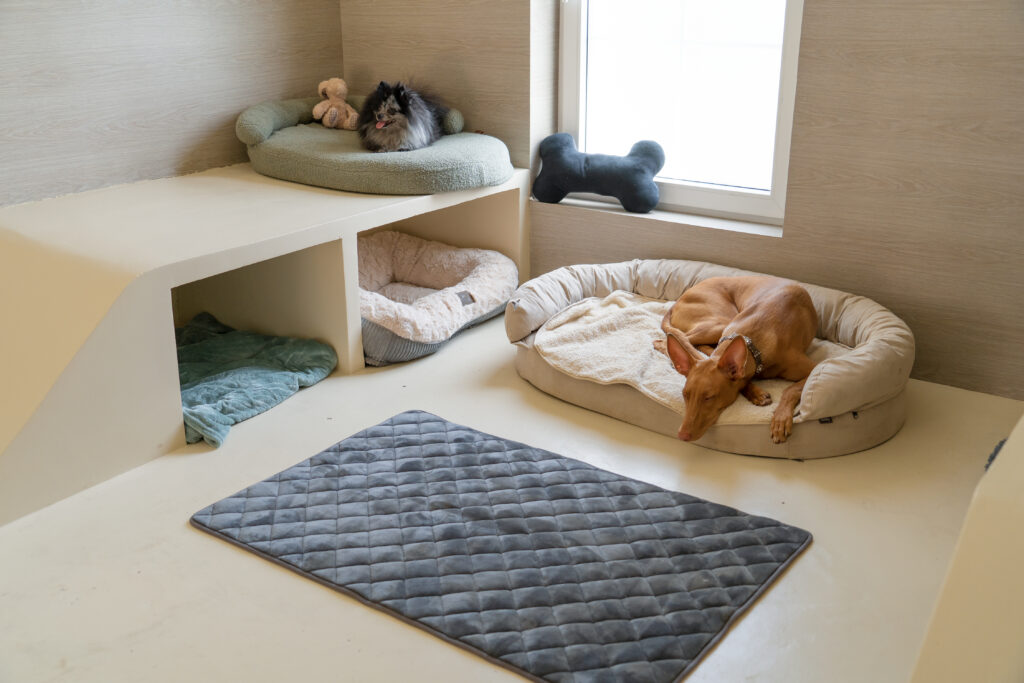
A full daycare day should not mean eight hours of continuous play. Dogs need decompression and sleep. Ask whether there are quiet areas, whether rest is scheduled or available when needed, and how overstimulation is handled.
4. What does supervision actually mean?
Ask who is physically with the dogs, how groups are managed and what happens during transitions, meals and rest periods. “Supervised” is useful only when the provider can describe what that looks like in practice.
5. What does the environment allow the dog to do?
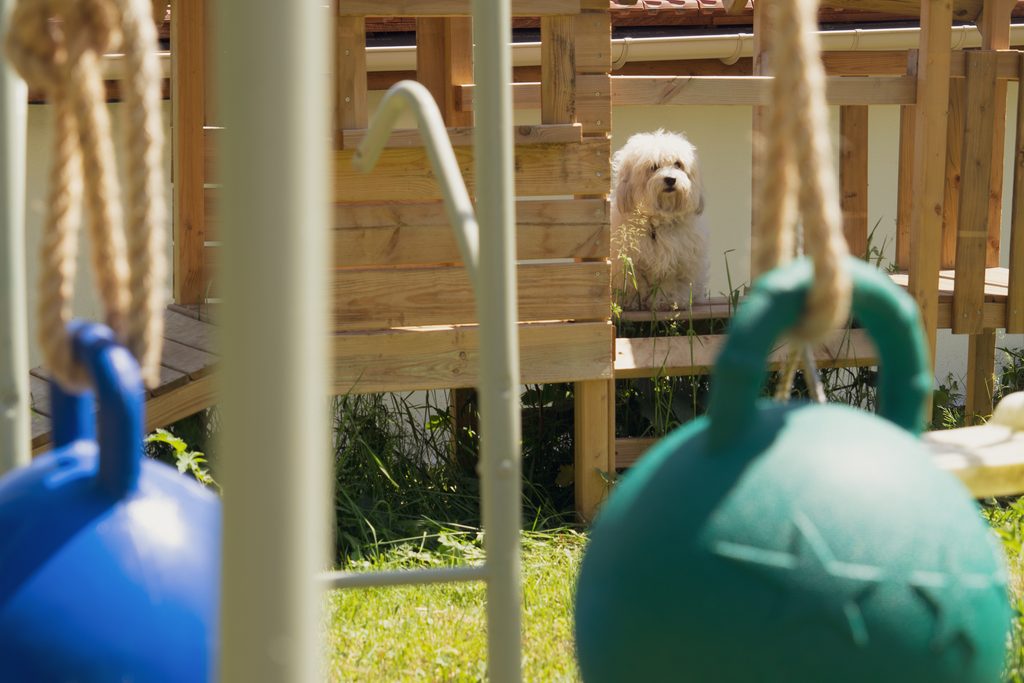
Indoor space can be useful, especially for calm time and bad weather, but dogs also benefit from sniffing, varied surfaces, movement and exploration. If outdoor space matters to you, ask how often dogs actually use it rather than judging from one photograph.
6. How does transport work?
For many expats, this becomes the deciding factor. A beautiful daycare an hour away is only useful if the transport fits your workday. Ask whether collection is at home or at a meeting point, the approximate window, how dogs travel and what happens if traffic disrupts the route.
7. What happens if my dog is sick, injured or simply unhappy?
You want a specific answer: who calls you, where the dog can be separated safely, which vet is contacted and what information the team keeps on file. A provider should be able to explain the process without improvising.
What “safe dog boarding in Paris” should mean in practice
Boarding adds another question: what happens after the daytime activities end?
🌙 Sleeping
Private room, kennel, crate, shared room or family home? Ask exactly where your dog will sleep.
👤 Overnight presence
Ask whether someone is on site overnight and how dogs are checked outside daytime activity hours.
🍽 Food
Clarify what is included, how usual food is handled and whether specific diets can be accommodated.
📲 Updates
Know what you will receive — photos, a report, app updates — and how quickly you are contacted if something is wrong.
“Premium dog daycare Paris”: ignore the adjective, inspect the system
Premium can mean many things. For one provider it may mean design and grooming. For another it may mean more space, lower group sizes or transport. The useful question is always: what changes for my dog?
| Marketing phrase | Ask for practical proof |
|---|---|
| Premium daycare | What facilities, staffing, activities, rest arrangements and services are actually included? |
| Small groups | What is the published maximum number of dogs together? |
| Safe environment | How are dogs assessed, separated when needed and supervised? |
| All-inclusive | Are transport, meals, activities and updates included, or added later? |
| Transport from Paris | Exactly which areas, days, times and home pick-up conditions apply? |
Small groups are useful. A good system is better.
Group size, compatibility, human supervision, rest and the physical environment all work together. Do not judge safety from one number alone.
The expat factor: choose a service that works with your actual Paris life
Moving countries adds friction that local owners may not have: you may not speak fluent French yet, your office routine may change, you may travel more often, and you may not have family nearby who can step in at short notice.
That makes a few practical questions disproportionately important:
- Can the team communicate comfortably with you in English if something important happens?
- Can you book both daycare and boarding with people your dog already knows?
- Does transport remove a journey from your day, or add one?
- Can the provider explain admission rules before you need urgent care?
- Will you receive enough information to know how your dog is settling in?
How Dog Valley answers this checklist
Dog Valley is one possible solution for Paris-based owners who want their dog to spend daycare and boarding time outside the city rather than in an urban indoor setting.
Daycare
Five hectares of secure natural grounds, daycare groups limited to 7 dogs maximum, activities and rest. The Signature Day is €95 all-inclusive.
Boarding
Private 10 m² air-conditioned suites, meals included, daytime activities and a team present on site 24/7 for boarding dogs. €95 per night.
Transport
Included within our standard pick-up area from Paris and western Paris, with home collection in selected areas and days.
Before a dog joins, we use a discovery visit to assess whether Dog Valley is a suitable environment. Dogs that are reactive towards other dogs are not accepted into the social groups. Unneutered or unspayed dogs may be accepted up to around 8–10 months depending on size and breed, after evaluation by the team.
You can see the full details on our dog daycare Paris, dog boarding near Paris and transport pages.
A 10-minute visit can tell you more than 100 reviews
Reviews are useful, but a visit lets you ask the questions that matter for your individual dog. Look at how the team talks about dogs that do not fit the service. Ask to see the rest areas. Ask how a difficult first day is handled. Ask what happens at night.
A provider who is transparent about limitations is usually giving you more useful information than one that promises every dog will love everything.
Your job is not to find the fanciest daycare.
It is to find the environment in which your dog can be safe, understood and comfortable — while your own day still works.
FAQ: dog daycare and boarding in Paris
Is small-group dog daycare always safer?
Not automatically. Smaller groups can make observation and management easier, but compatibility, supervision, rest and the physical environment are just as important. Ask for the actual maximum group size and how the group is formed.
Should a daycare assess my dog first?
For group daycare, an assessment is a strong sign that the provider is thinking about compatibility rather than simply filling places. Some dogs are happier with an individual walker, sitter or different style of care.
What should I check before dog boarding?
Where your dog sleeps, whether someone is present on site overnight, feeding arrangements, daily activity, health and emergency procedures, update frequency, transport and what happens if your dog struggles to settle.
Is professional dog boarding regulated in France?
Yes. Commercial dog-care activities are subject to sanitary and animal-welfare requirements. The official French rules cover commercial care with and without accommodation and set requirements around records, contracts and animal care.
How early should an expat arrange daycare or boarding after moving to Paris?
Before you urgently need it. A discovery visit or trial day is much easier when there is no flight, work emergency or holiday deadline forcing the decision.
Official resources
- French Ministry of Agriculture — how to have your pet looked after
- Légifrance — current rules for commercial dog and cat care
- City of Paris — dog-friendly green spaces
Legal and municipal information checked in October 2026. Official sources should take precedence if regulations change.